LED truck or printed billboard truck: which should you use?
Both put your brand on the road, but they suit different campaigns. A straight comparison of cost, flexibility, creative and where each one wins.
Both formats put your brand on a vehicle and send it to your audience. After that they behave very differently, and choosing the wrong one wastes money in ways that are hard to see until the campaign is running.
The printed billboard truck
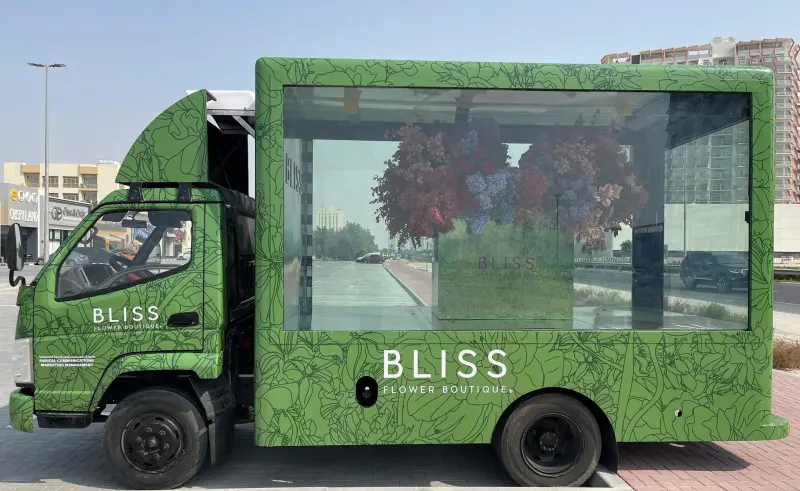
Large printed panels on the sides and rear. The artwork is physical, so it is uniformly lit by daylight, never glitches and costs less to run. The trade-off is that changing it means reprinting and refitting.
- Best for one strong message held for the whole campaign
- Lower day rate and no power or operator needed
- Excellent in daylight, weaker after dark
- Production has a lead time you cannot compress
The LED truck
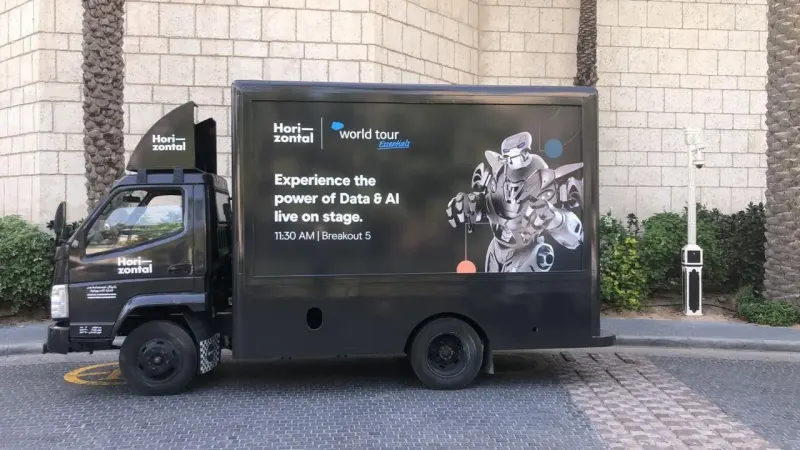
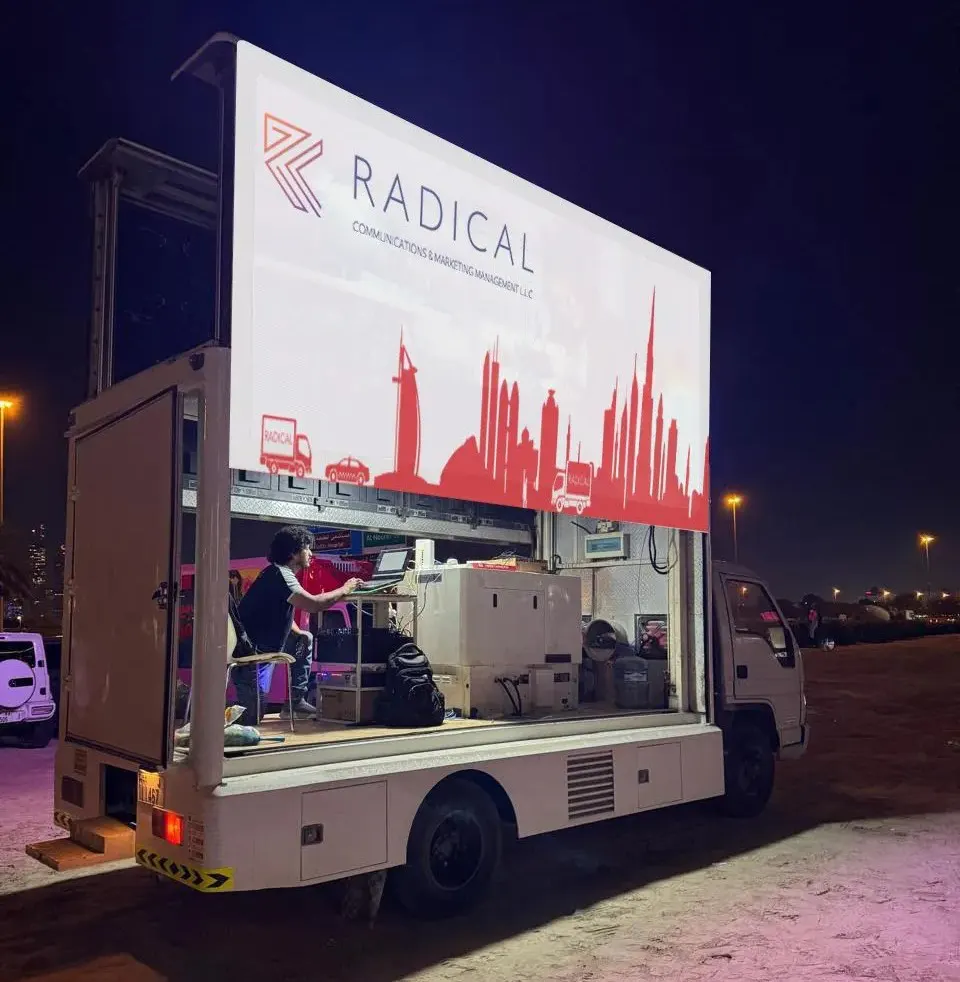
A high-brightness digital screen. The content is a playlist, so one campaign can carry several messages and change them by day part or by area.
- Best for video, motion and messages that change
- Comes into its own after dark and at events
- Higher day rate: the screen, the power and the operator
- Creative has to be legible at speed, which is a craft of its own
How to choose
Ask what the campaign has to do. If it is one offer, one date, one message, a printed billboard truck does it for less. If the message changes through the day, if you have film worth showing, or if the campaign runs mostly after dark, an LED truck earns the difference.
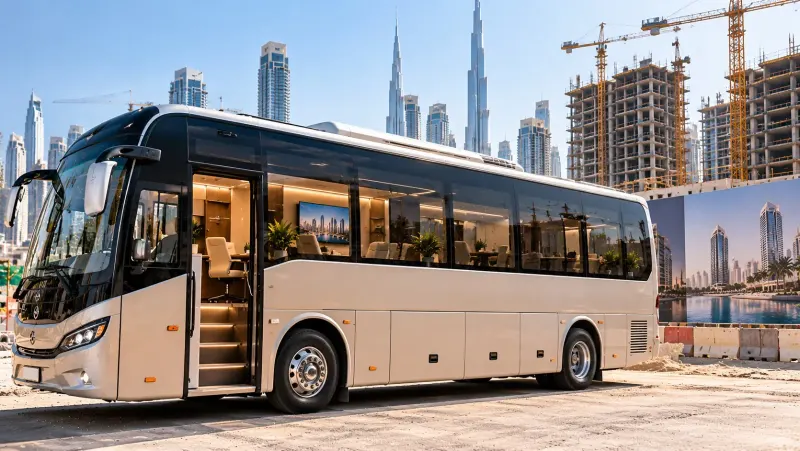
If people need to touch the product rather than look at it, neither is right and you want a 3D display truck instead.
Creative rules that apply to both
- Few words. A driver reads your panel for about two seconds
- High contrast, and the logo held on screen the whole time
- One call to action, large enough to read from the next lane
- A QR code or short link only if the vehicle will be parked
Tell us the objective and we will tell you which vehicle fits. See the full range under mobile truck activation.